
Zee Entertainment on Friday said it has "pruned" its Technology and Innovation Centre (TIC) by about 50 per cent following the guidance of a special committee, which had conducted a critical assessment of its several business verticals. The MD & CEO has pruned TIC staff strength by 50 per cent to achieve a cost-effective structure, a Bengaluru-based business vertical of the company that offers technology solutions, Zee Entertainment Enterprises Ltd (ZEEL) said in an official statement.

The Indian equity market valuation has been moving in tandem with the US 10-year treasury yield. While the benchmark US bond yield has witnessed a nearly 70 basis point decline since the end of October this year, dropping from 4.93 per cent to 4.23 per cent on Friday, the Sensex earnings yield has slipped by nearly 45 basis points - from 4.5 per cent to 4.05 per cent. Previously, Indian equities' earnings yields rose in sync with the US bond yields.

Get set to be amazed as Rediff.com has all that and more sporting action from the past week encapsulated in this super photo feature.

Diwali fireworks are expected to continue on Dalal Street next week, with four companies collectively seeking to mobilise over Rs 6,600 crore through initial public offerings (IPOs). In terms of the amount raised, this is poised to be the busiest week of calendar year 2023. Tata Technologies (Tata Tech), a subsidiary of Tata Motors, could lead the charge with an IPO projected to be over Rs 2,900 crore. This will mark the first maiden share sale by a Tata Group firm in nearly two decades.

The dealers operating in the space have jumped nearly three times over the past two years.

In a significant development, India is believed to have placed a funding request of around $55 million in its first call with the Pandemic Fund of the World Bank, sources said. The fund has been set up to finance critical investments in a bid to strengthen pandemic prevention, preparedness, and response capacities at national, regional, and global levels, with a focus on low- and middle-income countries. It was created in the aftermath of the Covid-19 global pandemic.
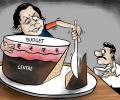
Niti Aayog will prepare the next list of central public sector companies for disinvestment in the next few weeks, its vice chairman Rajiv Kumar said on Thursday and expressed hope that the proposed asset reconstruction and management companies to address banks' bad loan woes will do a good job like the UTI. Days after Finance Minister Nirmala Sitharaman announced the Union Budget for 2021-22 laying out various measures (including disinvestment proposals) to bolster the pandemic-hit economy, Kumar also emphasised that the Modi government has shown consistent commitment for the welfare of farmers and for the improvement of the agriculture sector. "Now the process has begun... We will complete preparation of the next list in the next few weeks, we have got the marching order," Kumar said about the list of public sector companies for the next round of stake sales.

HCL Tech was the top gainer in the Sensex pack, rising over 4 per cent, followed by HDFC Bank, Infosys, NTPC, Nestle India, TCS and HUL. NSE Nifty surged 337.80 points to 14,845.10.

'Ameen Sayani was copied by generations. Now everyone is trying to become smaller Ameen Sayanis in their own way.'

'More than investors, fund houses, and advisors have raised caution and limited flows on small-and mid-caps.'

'The main worry is lots of new investors coming into the markets in order to make a quick buck/easy money.' 'Those things are happening again and have happened in the past as well.' 'All that has led to problems.' 'We are not there yet, but will get there eventually.'

The satta market is accepting bets on how many times Modiji will mention Nehru at his election rallies, says A Ganesh Nadar with a wink.

'Rather than taking a very short-term view on the markets, equity investing should be premised on longer term growth opportunities.'

Why is the RBI harsh on Paytm Payments Bank? Why did it give Rana Kapoor of Yes Bank Ltd such a long rope?Often, it's a long investigation process, but the RBI doesn't discuss this openly since that can threaten financial sector stability, explains Tamal Bandyopadhyay.

A week after the Income Tax Department's much publicised new e-filing portal went live, users continued to face technical glitches ranging from longer than usual logging time, inability to respond to notices and not all features functioning yet, chartered accountants said on Monday. The new portal, "http://www.incometax.gov.in/"www.incometax.gov.in, was launched last Monday (June 7), which the tax department as well as the government said was aimed at making compliance more taxpayer-friendly. But users complained of technical issues facing the site from the very first day and not everything has been fixed even after a week, chartered accountants (CAs) said, adding that taxpayers are unable to view past e-filed returns and many features/ facilities continue to be marked 'coming soon'. Finance Minister Nirmala Sitharaman herself had asked Infosys - the vendor which created the portal - and its Chairman Nandan Nilekani to fix the technical glitches.

In spite of its flaws, I enjoyed reading the book, says Vanita Kohli-Khandekar. Simply for the joy of digging into the life, in pictures and words, of one of the most enduring stars of Indian cinema.

Days after JP Morgan announced the inclusion of government bonds in its emerging market (EM) bond index, a host of banks and other financial institutions (FIs) are set to tap the debt market. They plan to raise Rs 18,000 crore by issuing non-convertible debentures (NCDs) and bonds. National Bank for Agriculture and Rural Development (Nabard) plans to raise up to Rs 3,000 crore via five-year social impact bonds on Tuesday, the first of its kind in India.

While the BJP said it has only portrayed some incidents, which happened during the previous Congress regime through the cartoons which are not meant to hurt anyone, the grand old party accused it of releasing such illustrations out of frustration.

Global financial markets are not yet fully factoring in any escalation in the Israel-Palestine geopolitical conflict, said Christopher Wood, global head of equity strategy at Jefferies in his latest weekly note to investors, GREED & fear. The pertinent point about ongoing events in West Asia from a financial market perspective, according to him, is that, despite much talk about a pending ground invasion of Gaza, no such invasion has yet happened. "This is beginning to make GREED & fear wonder if it is ever going to happen.

Chief Economic Advisor (CEA) V Anantha Nageswaran on Tuesday said India is not defending the rupee and the Reserve Bank of India is taking necessary steps to ensure that the movement of the rupee is gradual and in line with market trends. Nageswaran further said that the rupee is being managed in a manner that reflects the fundamentals of the economy. "India is not defending the rupee... I don't think Indian fundamentals are such that we need to defend the rupee. "The rupee can take care of itself," he said at an event in New Delhi.

Banks submitted bids amounting to Rs 4.75 trillion, around 2.5 times of the notified amount of Rs 1.75 trillion, at the Variable Rate Reverse Repo (VRR) auction conducted by the Reserve Bank of India (RBI) on December 22, a day after the liquidity deficit in the banking system widened to Rs 2.5 trillion. In the most recent VRR auction held by the RBI on December 15, bids totaling 2.7 times the notified amount were received. Banks secured Rs 1 trillion at a weighted average rate of 6.63 per cent.

Fintech companies believe that the impact of Reserve Bank of India's order last week on unsecured loans will be visible in six to 12 months and prompt them to diversify and strengthen their secured portfolio. Fintechs which source funds through banks or non-banking finance companies (NBFCs) are looking at quickly building their secured portfolio options to at least 40 per cent of their total portfolio. "Over the medium to long term, as part of our product strategy, we are evaluating secured products which can be enabled over a digital platform" said Yogi Sadana, the founder of Zype, a lending-focussed fintech.

If his attempt to have his appeal heard in the Supreme Court fails, in principle, Modi can apply to the European Court of Human Rights (ECHR) to try and block his extradition on the basis that he will not receive a fair trial and that he will be detained in conditions that breach Article 3 of the European Convention on Human Rights, to which the UK is a signatory.

If investing in Bitcoin, adopt a three to five-year horizon and invest systematically to gain from its volatility.

Where Shamshad Begum was charging Rs 900 for a song, Lata was prepared to settle for Rs 50 as she came on the scene. Raju Bharatan recalls yet another memorable incident from Lata Mangeshkar's incredible life.

Nearly 90 per cent of the stocks comprising the National Stock Exchange Nifty 500 Index and 49 of the 50 stocks that make up the Nifty50 are trading above their respective 200-day moving averages (DMAs). The 200-DMA is considered one of the most relevant trend indicators by investors and traders. They believe that stocks and indices trading above this key level exhibit strength and are likely to rally, while those trading below this level are viewed as bearish, with the stock/index expected to see a selloff.

Foreign Portfolio Investors' (FPIs) selling spree continues as they pulled out over Rs 3,400 crore from the Indian equity markets in the first three trading sessions of November on rising interest rates and geopolitical tensions in the Middle East. This came after such investors withdrew Rs 24,548 crore in October and Rs 14,767 crore in September, data with the depositories showed. Before the outflow, FPIs were incessantly buying Indian equities in the last six months from March to August and brought in Rs 1.74 lakh crore during the period.

It is pouring heavily not only in North India, but at Dalal Street too. However, the latter is seeing a flurry of initial public offers (IPOs). After a busy fortnight that ended on July 7 with seven IPOs - IdeaForge Technology, Cyient DLM, PKH Ventures, Pentagon Rubber, Global Pet Industries, Tridhya Tech, and Synoptics Technologies -- four more IPOs will hit the Street this week, including one mainboard IPO of Utkarsh Small Finance Bank. That apart, India's largest securities' depository National Securities Depository Limited (NSDL) has filed its draft red herring prospectus (DRHP) with the Securities and Exchange Board of India (Sebi) for an IPO.

Foreign Portfolio Investors (FPIs) selling spree continued as they dumped Indian equity worth over Rs 5,800 crore this month so far on rising interest rates and geopolitical tensions in the Middle East. This came after such investors withdrew Rs 24,548 crore in October and Rs 14,767 crore in September, data with the depositories showed. Before the outflow, FPIs were incessantly buying Indian equities in the last six months from March to August and brought in Rs 1.74 lakh crore during the period.

These photographs send out a powerful message.

Brokerages believe that the Bharatiya Janata Party's (BJP's) stronger-than-expected showing in state elections reduces political risks for the domestic markets going into 2024. However, after the short-term excitement, the focus will soon shift to earnings, global liquidity conditions, and the interest rate trajectory. "BJP's win in the three state elections is much better than what exit polls suggested and reinforces the consensus expectations of a Modi win in the 2024 national elections with a greater likelihood of 300+ seats for the BJP.

Questions will be raised over why those changes take place and whether non-economic factors are at play, says A K Bhattacharya.

rediffGURU Samkit Maniar answers readers' personal income tax queries
Eleven companies have launched their initial public offerings (IPOs) in December 2023, making this month the second-best December for public offerings since 1996. Collectively, they are raising Rs 8,182.7 crore this month. In December 2021, 11 companies raised Rs 9,534 crore. However, excluding December 2021, this month marks the best December for IPOs since 1996.

Assume Voot, JioCinema and Disney+ Hotstar are merged into one entertainment app, and you have a streaming service with more than 233 million unique visitors. That is a reach just under half of India's largest streaming app: YouTube. 'This level of consolidation does not exist even in the US.'

The liquidity in the banking system could ease in the coming week due to an increase in government spending - a development that would be the key for the Reserve Bank of India (RBI) to decide whether to extend the incremental cash reserve ratio (I-CRR) mandate for banks. There are signs of improvement in the liquidity scenario as banks parked Rs 25, 833 crore with the RBI on Thursday. Market participants expect liquidity to gradually improve by the end of the month or during the first week of September, aided by government spending.
'If the NDA comes to power with 320-330 plus seats, then we could see some correction. We could possibly see a level of 19,500 to 20,000.' 'If the NDA comes to power with a majority of 400-plus, we could see the markets going to about 23,500-24,000 levels.' 'And from there we could see some correction because markets are expensive at this point of time and a correction is overdue.'

Investors should view any bounce-back in bank stocks as an opportunity to exit the pack, analysts suggested, as the worst may not be over yet. The recent quarterly results of HDFC Bank and Axis Bank disappointed the Street, triggering a marketwide selloff by foreign institutional investors, especially in banking counters. While HDFC Bank, which was the anchor for the market correction during the past week, ended 2 per cent higher amid short covering on Wednesday, Axis Bank's shares settled 3 per cent lower.

The next spectrum auction will be held in late February 2024 and the reserve price for most bands will remain the same as the 2022 auction, department of telecommunications (DoT) officials have said. The government expects operators to go for low bands beginning in 600 megahertz (MHz), licences for many of which are lapsing soon. Back in September 2021, the government had decided that spectrum auctions should be held annually.

Nirav Modi, the fugitive diamond merchant wanted in India to stand trial on fraud and money laundering charges, told a UK court on Thursday that he could be in England for years as some ongoing proceedings prevent his extradition. The 52-year-old former billionaire appeared for a hearing at Barkingside Magistrates' Court in east London via video link from Thameside prison in relation legal costs, or fines, amounting to GBP 150,247.00, accrued over his failed extradition appeal proceedings in the London high court. Dressed in a pink prison-issue outfit and sporting a moustache, a plump and bald Nirav addressed the three-member magistrates' bench to reveal that he had complied with the previous court direction to pay in GBP 10,000 per month towards the fines.
